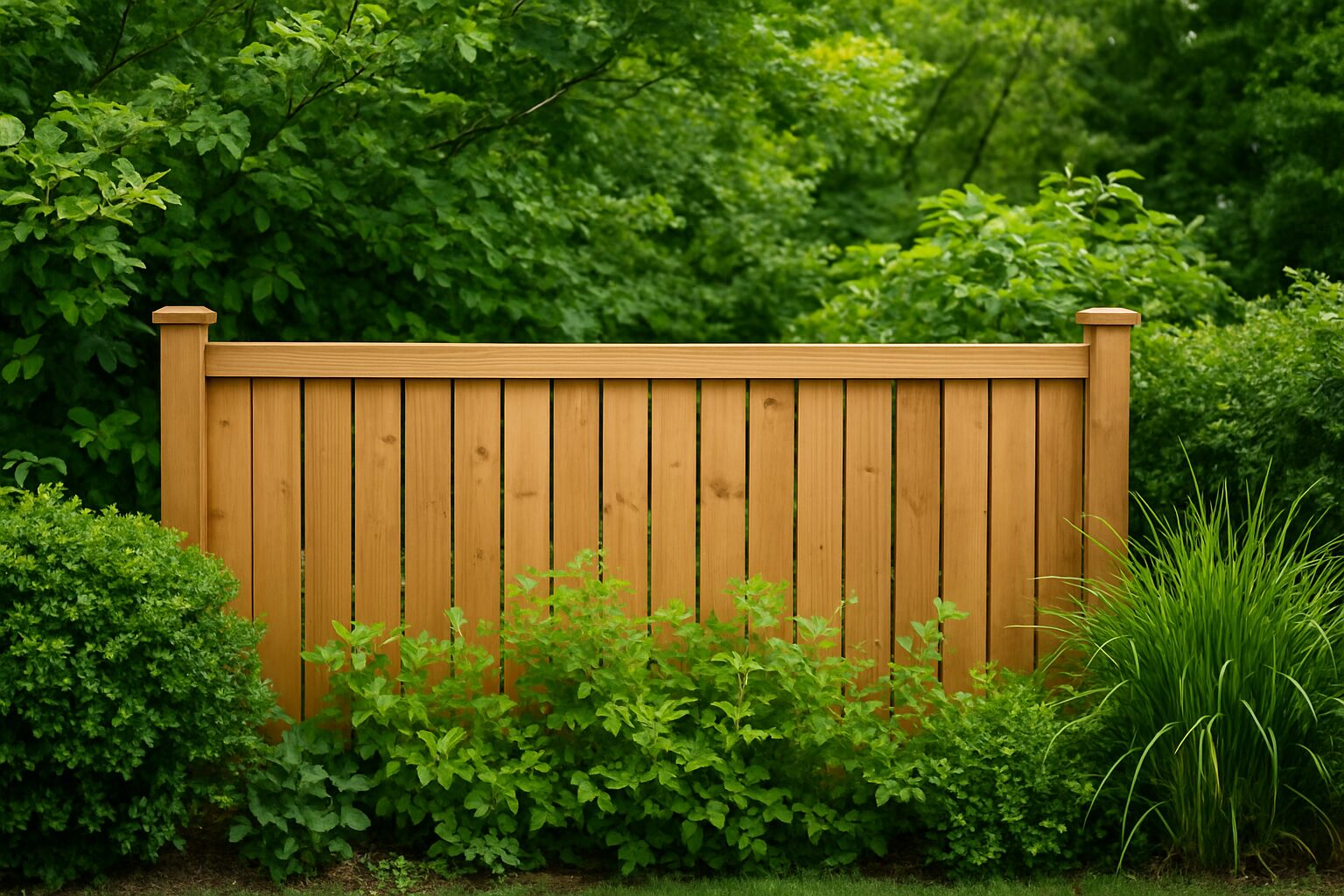
There’s a particular kind of noise that makes a garden hard to enjoy. Not the odd lawnmower or children playing next door, but the constant background sound of traffic, engines, delivery vans and people passing close to the boundary.
You can get used to it indoors. Outside, it’s a different matter.
I’ve worked on plenty of fencing jobs across Leeds and West Yorkshire where noise has been one of the main reasons for replacing an otherwise decent boundary. Homeowners aren’t always expecting complete silence. They just want to sit outside without feeling as though they’re sitting beside the road.
The trouble is that ordinary garden fencing isn’t designed to stop sound.
A well-built fence can help, sometimes quite noticeably, but there’s a big difference between creating privacy and reducing noise. Anyone considering garden fencing in Leeds for a noisy garden needs to understand that difference before spending money.
Some designs work better than others. A few popular choices barely help at all.
Why Sound Travels Through Ordinary Garden Fences
Most domestic fencing is built to provide privacy, security and a clear boundary.
Sound reduction is rarely part of the original specification.
Take a standard overlap panel. It might look reasonably solid from a distance, but there are often small gaps between boards. The timber itself is fairly thin, and the construction isn’t particularly heavy.
Sound finds its way through those gaps.
It also travels over the top of the fence and around either end.
That’s why replacing an old fence with a new one of exactly the same design might improve the appearance of the garden without making much difference to the noise.
I’ve had homeowners ask whether adding another layer of timber would solve the problem.
Sometimes it helps a little.
But if there’s still a gap beneath the fence or the noise source is clearly visible above it, the improvement can be disappointing.
Height Matters, but There’s a Catch
A taller fence can help block the direct path between a noise source and the person hearing it.
Think about a garden backing onto a busy road.
If you can sit on the patio and see passing vehicles through or over the boundary, sound has a fairly direct route into the garden.
A solid barrier that interrupts that route may reduce some of the noise.
But doubling the height of a fence doesn’t mean halving the sound.
Sound bends around barriers. Lower frequencies, such as the rumble from heavy vehicles, are particularly difficult to control.
There’s also the question of planning permission.
In England, fences next to highways used by vehicles are generally subject to a one-metre height limit without planning permission, while the usual limit elsewhere is two metres. Other restrictions can apply, including on particular properties and sites.
You can’t simply install an eight-foot fence because the road is noisy.
And even if permission is available, the posts and foundations need to cope with the extra wind load.
Solid Construction Makes a Difference
If reducing noise is a genuine priority, I’d generally look at a close-fitting, substantial fence rather than lightweight decorative panels.
Mass matters.
So does the absence of gaps.
Traditional featheredge fencing can provide a reasonably solid boundary when the boards overlap correctly and the supporting structure is strong.
But featheredge alone doesn’t turn a fence into an acoustic barrier.
Ordinary boards can shrink, joints can open and sound can still pass through weaker sections.
Purpose-built acoustic fencing uses more carefully specified materials and construction methods. These systems are designed to reduce sound transmission rather than simply hide whatever sits on the other side.
They also tend to be considerably heavier.
That means stronger posts, suitable foundations and careful installation.
You can’t just attach heavy acoustic panels to old posts and hope for the best.
The Gap Beneath Your Fence Could Be the Problem
One thing that gets overlooked surprisingly often is the bottom of the fence.
Homeowners spend hundreds or thousands of pounds replacing panels, then leave a substantial gap underneath.
For ordinary garden fencing, a small clearance can help keep timber away from wet soil.
For noise reduction, uncontrolled gaps weaken the barrier.
The two requirements need to be balanced.
A properly designed system might use suitable gravel boards or other solid components to maintain the barrier while keeping vulnerable timber clear of moisture.
What you don’t want is untreated timber buried directly in the ground to close a gap.
That might reduce one problem while creating another.
I’ve removed enough rotten fence panels to know how that ends.
Slatted Fencing Looks Good but Won’t Stop Much Noise
Horizontal slatted fencing has become extremely popular.
It’s easy to see why.
The clean lines work well with contemporary gardens, particularly when combined with modern paving, raised beds and outdoor seating.
But slatted fencing is usually a poor choice when noise reduction is the main objective.
The gaps between boards allow sound to pass through.
Even narrow gaps make a difference.
I’ve seen homeowners choose attractive slatted screens for gardens overlooking busy roads, expecting the new boundary to make the space noticeably quieter.
It rarely delivers the result they imagined.
That’s not a criticism of slatted fencing. It’s simply being asked to do something it wasn’t designed for.
For visual screening, it can be excellent.
For meaningful noise reduction, I’d look elsewhere.
Positioning Can Matter More Than the Fence Itself
Here’s something worth thinking about before replacing an entire boundary.
Where do you actually sit?
A garden might be twenty metres long, but the family only uses a small patio near the house.
In that situation, treating the whole rear boundary isn’t always the most effective approach.
A carefully positioned solid screen closer to the seating area may interrupt more of the direct sound path.
The height of the noise source matters too.
Cars passing on a level road create a different problem from vehicles travelling along an elevated road behind the property.
The same applies to neighbouring gardens.
A conversation taking place at ground level is easier to screen than noise coming from an upstairs balcony.
I always think it’s worth spending time in the garden before deciding what to build.
Stand where the noise is worst.
Sit where you normally sit.
Look towards the source.
Those simple observations can save a lot of wasted money.
Leeds Gardens Present Some Awkward Challenges
Leeds has plenty of properties where gardens sit close to busy roads, railway lines or commercial areas.
There are also rows of terraced houses where neighbouring gardens are separated by little more than lightweight timber panels.
The ground conditions vary enormously.
In some areas, heavy clay makes excavation difficult and holds water around foundations. Elsewhere, older properties have rubble, buried brickwork and previous fence foundations hidden beneath the soil.
That matters when installing heavier fencing.
A substantial acoustic barrier places greater demands on its foundations than a standard domestic panel.
If the posts aren’t secure, wind will eventually find the weakness.
Experienced fencing contractors should assess the ground, exposure and proposed barrier before recommending a system.
The most expensive panels in the world won’t help if the posts start leaning after two winters.
Can Hedges and Trees Reduce Garden Noise?
Planting is often suggested as a natural alternative to acoustic fencing.
It certainly makes gardens feel more peaceful.
A thick hedge softens the view of a busy road, attracts wildlife and creates a sense of separation.
But there’s an important distinction between making a garden feel quieter and measurably reducing sound.
A narrow hedge usually offers limited acoustic protection.
Dense, deep belts of vegetation can help under certain conditions, but a row of small shrubs along a domestic boundary won’t suddenly block traffic noise.
That doesn’t make planting pointless.
Far from it.
Combining a solid fence with suitable shrubs can create a much more pleasant outdoor space.
The planting softens the hard boundary and helps make the garden feel less exposed.
Just don’t expect a few conifers to perform like a purpose-built acoustic screen.
The Sound of Water Can Change How a Garden Feels
Not every noise problem needs to be solved by blocking sound.
Sometimes the answer is to change what you hear.
A small water feature near a seating area can make distant traffic less noticeable.
It doesn’t remove the traffic noise.
Instead, the sound of moving water can partly mask it.
That can work particularly well with a solid boundary and thoughtful planting.
I’ve been in gardens where the road was still clearly audible, but the space felt far calmer because the design gave your attention somewhere else to go.
There’s a limit, of course.
A water feature won’t disguise heavy lorries passing a few metres away.
And nobody wants to replace traffic noise with an irritating pump running all day.
The sound needs to be gentle enough to suit the space.
Autumn Is a Good Time to Spot Weak Boundaries
By late October, many gardens are becoming more exposed.
Leaves are falling.
Climbing plants are thinning out.
The shrubs that provided screening during summer no longer hide the boundary as effectively.
That can make existing noise feel more noticeable.
It’s also a useful time to inspect fencing.
Look for gaps that have opened between boards, loose rails and panels that rattle in the wind.
Check whether gates close properly.
A badly fitting gate can leave a surprisingly large opening in an otherwise solid boundary.
Winter weather will soon test anything that’s already loose.
There’s little point investing in a heavier fencing system if the supporting structure is starting to fail.
What Does Noise-Reducing Fencing Cost?
There’s no sensible single price for acoustic fencing.
Costs depend on the system, height, length, access, foundations and ground conditions.
Purpose-built acoustic fencing will generally cost more than standard domestic timber panels.
The materials are heavier, installation can take longer and the supporting structure may need to be more substantial.
Removing an existing fence adds another cost.
Old concrete foundations can be particularly awkward, especially in gardens with restricted access.
Before paying for specialist fencing, I’d want to establish exactly what the homeowner hopes to achieve.
Reducing voices from the neighbouring patio is one thing.
Trying to eliminate constant traffic noise from a major road is quite another.
The second problem may require professional acoustic assessment, and even then the result will have limits.
Promises of a completely silent garden should be treated with suspicion.
Don’t Forget the Neighbours
Noise problems often involve neighbouring properties, so boundary changes need a little thought.
A tall, solid fence might improve privacy and reduce some sound, but it can also affect daylight, views and the feel of a neighbouring garden.
It may change wind patterns too.
Before replacing a shared boundary, establish ownership and discuss the work where appropriate.
Check any planning restrictions.
For larger or specialist barriers, it’s worth getting proper advice rather than assuming ordinary domestic fencing rules cover everything.
A fence that solves one problem shouldn’t create three more.
A Quieter Garden Starts With Realistic Expectations
I’ve always thought the best fencing jobs begin with an honest conversation about what the customer wants.
Sometimes that’s privacy.
Sometimes it’s security.
Sometimes it’s simply replacing an old fence that has reached the end of its life.
Noise reduction is different because people can’t easily judge the result until the work is finished.
That’s why material choice, construction and positioning matter so much.
A solid, well-built fence can help make an outdoor space more comfortable, particularly where it blocks the direct path of unwanted sound.
But ordinary garden panels aren’t soundproof, slatted screens won’t do much to stop noise, and extra height isn’t always the answer.
For anyone considering garden fencing services, it’s worth discussing noise before choosing the panels rather than treating it as an afterthought.
Sometimes a better boundary is enough.
Sometimes the seating area needs moving.
And sometimes the noise source is simply too large for a domestic fence to make a major difference.
I’d rather tell a homeowner that before the work starts than leave them standing beside a beautiful new fence wondering why they can still hear every car going past.